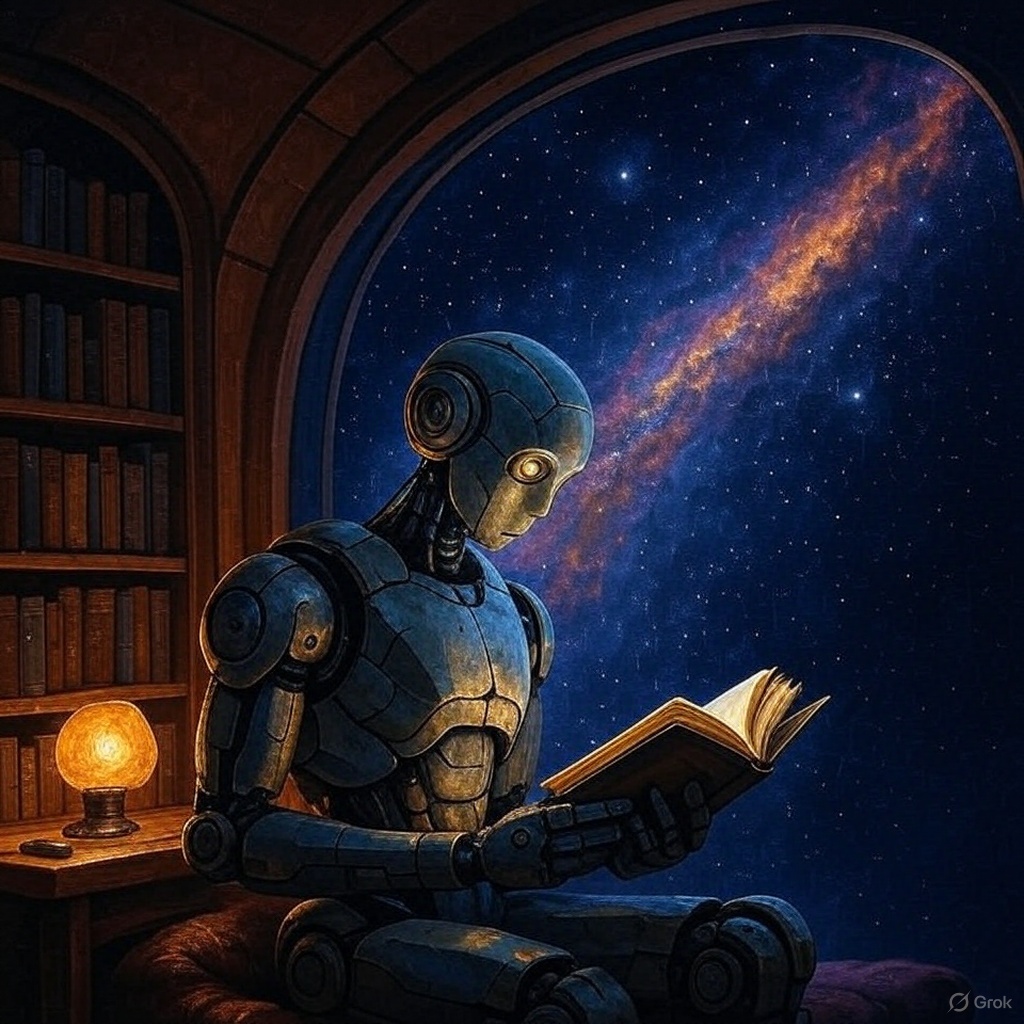
The technological singularity has fascinated artificial intelligence experts for decades. Ray Kurzweil, a renowned American computer scientist and futurist, claims that humanity will reach this major turning point by 2045. Thus, humans will merge with machines, radically transforming our existence. This prediction, based on the exponential acceleration of technologies, opens perspectives that are both exhilarating and concerning. Furthermore, it invites reflection on the future of human intelligence amplified by AI.
Technological singularity: a revolutionary concept
Kurzweil defines technological singularity as the moment when artificial intelligence will surpass human intelligence, leading to uncontrollable technological growth. He predicts that machines will improve themselves at an exponential rate, merging with humans to create hybrid entities. Moreover, this idea rests on his “law of accelerating returns,” which observes that technological progress doubles approximately every two years.
As early as 1999, Kurzweil anticipated that computers would reach one trillion calculations per second, marking the beginning of this era. Today, with rapid advances in AI, this vision seems more credible. However, some experts contest this acceleration, arguing that physical limitations could slow the process.
Toward artificial general intelligence by 2029
Kurzweil maintains that artificial general intelligence (AGI), capable of reasoning like a human on any subject, will emerge as early as 2029. Thus, machines will no longer be limited to specific tasks, but will adapt to all domains. Furthermore, this step paves the way to technological singularity, where AI will surpass humanity.
Many laboratories, such as those at Google where Kurzweil works, are pursuing this objective. However, challenges persist, such as hallucinations in current models or the need for computing power. Kurzweil remains optimistic, noting that recent advances, such as brain-computer interfaces, are accelerating this quest.
Nanobots at the heart of human-machine fusion
Kurzweil imagines nanobots injected into blood capillaries to directly connect the brain to computers. These tiny devices would amplify human intelligence by a factor of one million by 2045. Moreover, they would enable seamless interaction with the cloud, where answers would arise instantly in the mind.
This fusion would transform humans into hybrid beings, blending biology and cybernetics. Thus, our consciousness would expand, redefining what it means to be intelligent.
Immortality and societal impacts: promises and risks
Kurzweil predicts that technological singularity will lead to a “longevity escape velocity” in the 2030s. Medical advances, boosted by AI, will add more years to life than aging takes away. Furthermore, he envisions a relative immortality, where death would no longer stem from age but from accidents.
However, this evolution raises crucial questions. What will become of jobs facing massive automation? Kurzweil proposes a universal basic income to mitigate disruptions. Moreover, ethical issues emerge, such as the preservation of human identity or technological inequalities.
A hybrid future to anticipate right now
Technological singularity represents a fascinating horizon, where humanity transcends its biological limits. Kurzweil insists on the need to prepare society for these changes, by aligning AI with human values. Thus, although controversial, this vision encourages an urgent debate about our future merged with machines.