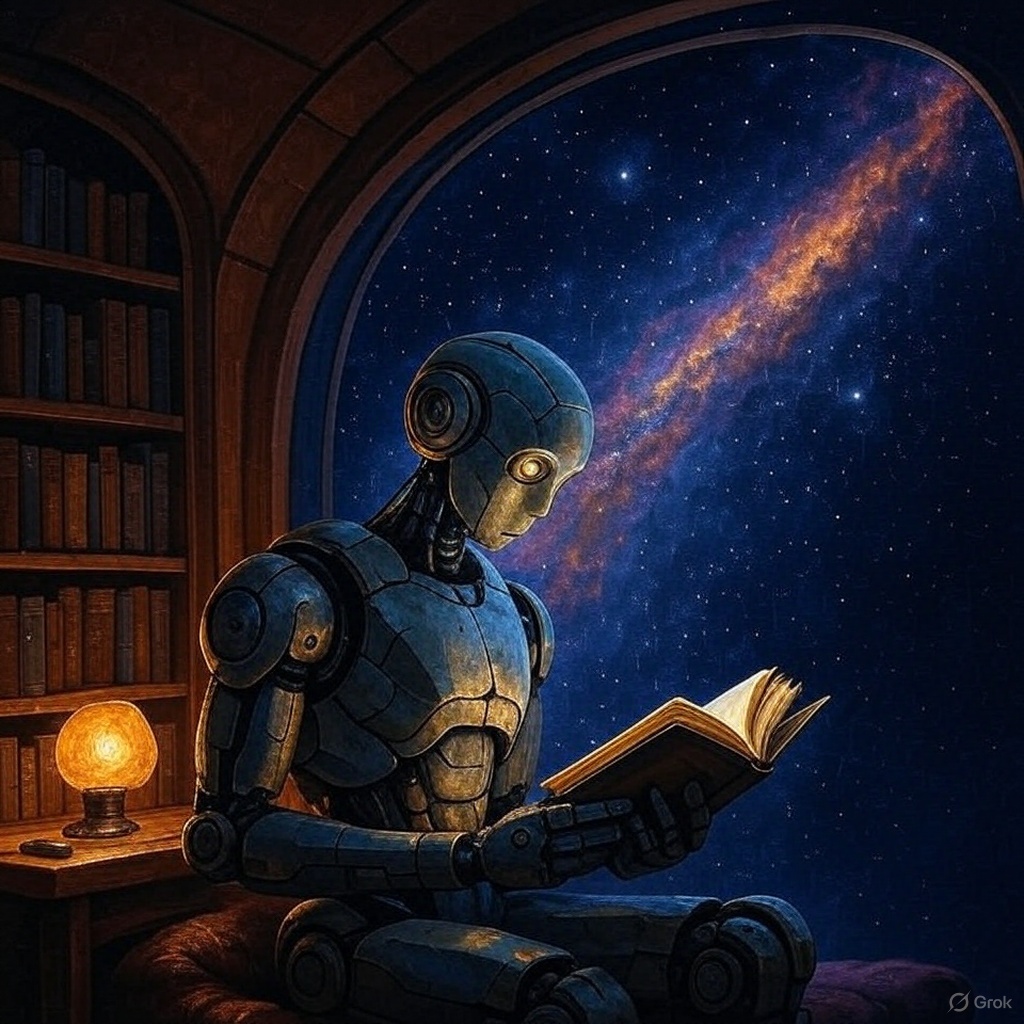
Artificial intelligence is finishing 2025 with a bang with a series of major announcements that are radically transforming the technological landscape. December 2025 marks a decisive turning point in the AI race, where Google and OpenAI are locked in a fierce battle to dominate the market. From advanced reasoning models to autonomous agents capable of managing complex tasks, through next-generation image generation and strategic partnerships between tech and entertainment giants, AI is redefining our daily lives and opening unprecedented horizons.
- The battle of the titans: Google Gemini 3 vs OpenAI GPT-5.2
- Google Gemini 3: intelligence for everyone
- Gemini 3 Flash: accessible power
- OpenAI strikes back with GPT Image 1.5 and GPT-5.2
- OpenAI and Disney: a historic partnership
- Autonomous agents become reality
- AI in the enterprise: massive adoption
- Ethical issues and regulation
- Generative interfaces and new user experiences
- Conclusion: 2026, the year of agentic AI?
The battle of the titans: Google Gemini 3 vs OpenAI GPT-5.2
Google Gemini 3: intelligence for everyone
On November 18, 2025, Google made a major move by unveiling Gemini 3, its “most intelligent model to date”. This announcement provoked an immediate reaction from OpenAI, forcing the company to activate a “code red mode” to accelerate the deployment of its own innovations.
Gemini 3 Pro sets new performance records across all benchmark standards. The model excels particularly in reasoning, multimodal understanding (text, image, video, audio), and coding. With a context window of 1 million tokens and 64,000 tokens in output, Gemini 3 Pro can process massive amounts of information.
Gemini 3 Flash: accessible power
On December 17, 2025, Google completed its arsenal with Gemini 3 Flash, a model that combines Gemini 3 Pro’s reasoning capabilities with faster speed and reduced costs. The slogan: “cutting-edge intelligence built for speed at a fraction of the cost”.
Gemini 3 Flash immediately becomes the default model in the Gemini app, replacing Gemini 2.5 Flash. The performance is impressive:
- 33.7% on the “Humanity’s Last Exam” benchmark (without tools)
- 81.2% on MMMU-Pro (multimodal reasoning)
- 90.4% on GPQA Diamond (scientific knowledge)
- 3 times faster than Gemini 2.5 Pro
The model is already being used by companies like JetBrains, Figma, Cursor, Harvey, and Latitude.
OpenAI strikes back with GPT Image 1.5 and GPT-5.2
Facing Google’s offensive, OpenAI counter-attacked on December 16, 2025 with GPT Image 1.5, its new flagship image generator. This launch comes as a direct response to Nano Banana Pro from Google, which had gained popularity in late November 2025 for its realism and precision in text rendering.
GPT Image 1.5 replaces the old DALL·E workflows and becomes OpenAI’s default image system, accessible via ChatGPT and the API. The model incorporates advanced moderation controls configurable via the API, allowing developers to balance security and creative freedom.
In parallel, GPT-5.2, launched in early December 2025, improves upon GPT-5 with faster responses, better contextual understanding, and enhanced reasoning capabilities. On the SWE-bench verified benchmark (coding), GPT-5.2 achieves 78% accuracy.
OpenAI and Disney: a historic partnership
An unprecedented strategic alliance
The announcement that shook Hollywood: on December 16, 2025, The Walt Disney Company and OpenAI concluded a content licensing agreement for a duration of three years. Disney becomes the first major content licensing partner on Sora, OpenAI’s video generation platform.
As part of this historic agreement:
- Sora will be able to generate short videos based on more than 200 Disney animated characters from Disney, Marvel, Pixar, and Star Wars
- Users will be able to create content with iconic costumes, accessories, vehicles, and environments
- ChatGPT Images will have access to the same intellectual property for image generation
- A selection of videos created by fans will be available for streaming on Disney+ in early 2026
A one billion dollar investment
Disney is investing 1 billion dollars in OpenAI, thus consolidating its commitment to generative AI. Robert A. Iger, CEO of Disney, states: “Technological innovation has continually shaped the evolution of entertainment. Through this collaboration with OpenAI, we will thoughtfully and responsibly extend the reach of our storytelling through generative AI”.
This alliance marks a turning point in the entertainment industry’s recognition of AI and establishes standards for responsible AI use in this sector.
Autonomous agents become reality
Gemini Agent: the assistant that acts for you
On December 19, 2025, Google unveiled Gemini Agent, an experimental feature that manages multi-step tasks directly in the Gemini app. Powered by the advanced reasoning of Gemini 3, the agent can:
- Connect to your Google applications (Gmail, Calendar, Drive)
- Organize your inbox
- Plan complex trips
- Perform in-depth research with Deep Research
- Navigate the web in real time
The user remains in control: Gemini Agent asks for confirmation before critical actions such as purchases or sending messages. Initially available to Google AI Ultra subscribers in the United States, this tool marks “our next step toward a true generalist agent”, according to Google.
OpenAI Atlas: the AI browser
To counter Comet from Perplexity AI and Google Search’s AI mode, OpenAI has launched its AI-powered browser: Atlas. This agentic and interactive browser can:
- Perform multi-step actions
- Manage online shopping
- Conduct in-depth research
- Remember previous searches thanks to its “Memory” function
The Atlas browser illustrates OpenAI’s vision for AI agents capable of navigating and interacting with the web autonomously while remaining under human supervision.
The Agentic AI Foundation
In December 2025, OpenAI, Anthropic, and Block co-founded the Agentic AI Foundation (AAIF) under the Linux Foundation. This initiative aims to establish open standards for AI agents, with the AGENTS.md standard (already adopted by more than 60,000 projects).
The goal: ensure interoperability of AI tools from different vendors and prevent technology lock-in, crucial for SMEs and enterprises.
AI in the enterprise: massive adoption
ChatGPT reaches 800 million weekly users
On December 8, 2025, OpenAI published its report “The state of AI in the enterprise”, revealing spectacular figures:
- ChatGPT now serves more than 800 million users every week
- Weekly messages in ChatGPT Enterprise have increased by approximately 8 times in one year
- The average worker sends 30% more messages
- The use of structured workflows (Projects, Custom GPTs) has increased by 19 times since the beginning of the year
- The consumption of reasoning tokens per organization has increased by approximately 320 times in 12 months
Measurable productivity gains
According to OpenAI’s survey of 9,000 workers across nearly 100 companies:
- 75% of workers report that AI has improved either the speed or quality of their work
- The fastest-growing sectors are technology, health, and manufacturing
- Professional services, finance, and technology operate at the largest scale
Geographically, the fastest-growing professional client bases include Australia, Brazil, the Netherlands, and France, each exceeding 140% growth year-over-year.
AI in scientific research
A survey by publisher Wiley published in October 2025 reveals that 62% of researchers now use AI for research or publication-related tasks, up from 45% in 2024. AI is transforming research productivity, although questions remain about the impact of growing dependence on these tools.
Ethical issues and regulation
AI regulation in New York
On December 20, 2025, New York Governor Kathy Hochul signed the Responsible AI Safety and Education Act, introducing new regulations for AI developers. While the law was softened compared to earlier versions, it represents a significant step forward in AI governance.
Privacy concerns
The growing use of AI for personalized pricing raises concerns. A PBS News Weekend report from December 20, 2025 reveals that companies could use AI to analyze personal online data and adjust prices on an individual basis.
UK-Google DeepMind partnership
A major announcement in December 2025: the partnership between the British government and Google DeepMind. This partnership aims to accelerate the development of agentic AI and physical AI in the United Kingdom, with 22 billion pounds invested by Microsoft in the country.
The British government also announced a sovereign AI fund of 500 million pounds and doubled its AI framework to 480 million pounds, demonstrating the strategic importance placed on this technology.
Generative interfaces and new user experiences
Gemini 3 pushes interface boundaries
Google introduced the concept of “generative interfaces” with Gemini 3. Two innovative experiences are being rolled out:
Visual Layout: Gemini 3 organizes information visually and interactively, allowing you to click, scroll, and explore complex concepts intuitively.
Dynamic View: Using Gemini 3’s agentic coding capabilities, this feature creates a custom user interface in real time, perfectly suited to your request. For example, asking Gemini to explain the Van Gogh Museum with the life context of each work generates an interactive response allowing you to explore each painting.
A new shopping experience
Google has dramatically improved the shopping experience in the Gemini app, directly integrating product lists, comparison tables, and prices from Google’s Shopping Graph, which contains more than 50 billion product references.
Conclusion: 2026, the year of agentic AI?
December 2025 will be remembered as the month when agentic AI moved from promise to reality. With Gemini Agent, OpenAI Atlas, and the Agentic AI Foundation, the foundation is laid for a radical transformation of how we interact with technology.
The models Gemini 3 and GPT-5.2 demonstrate that AI is now reaching levels of reasoning and multimodal understanding that bring it closer to human intelligence in specific domains. Massive enterprise adoption, with 800 million weekly users for ChatGPT and 320 times growth in reasoning token consumption, confirms that AI has become an indispensable tool in professional daily life.
The Disney-OpenAI partnership opens a new era for AI in entertainment, establishing standards for responsibility and intellectual property respect. This collaboration shows how traditional creative industries can partner with tech giants to leverage AI ethically.
However, important challenges persist. Regulation must keep pace with innovation, questions of privacy and algorithmic pricing require particular attention, and the impact on employment remains a major concern despite observed productivity gains.
Looking toward 2026, one thing is certain: agentic AI will transform how we work, create, and interact with the digital world. Autonomous agents capable of managing complex multi-step tasks are no longer science fiction, but a tangible reality redefining the boundaries of what’s possible.
Sources: