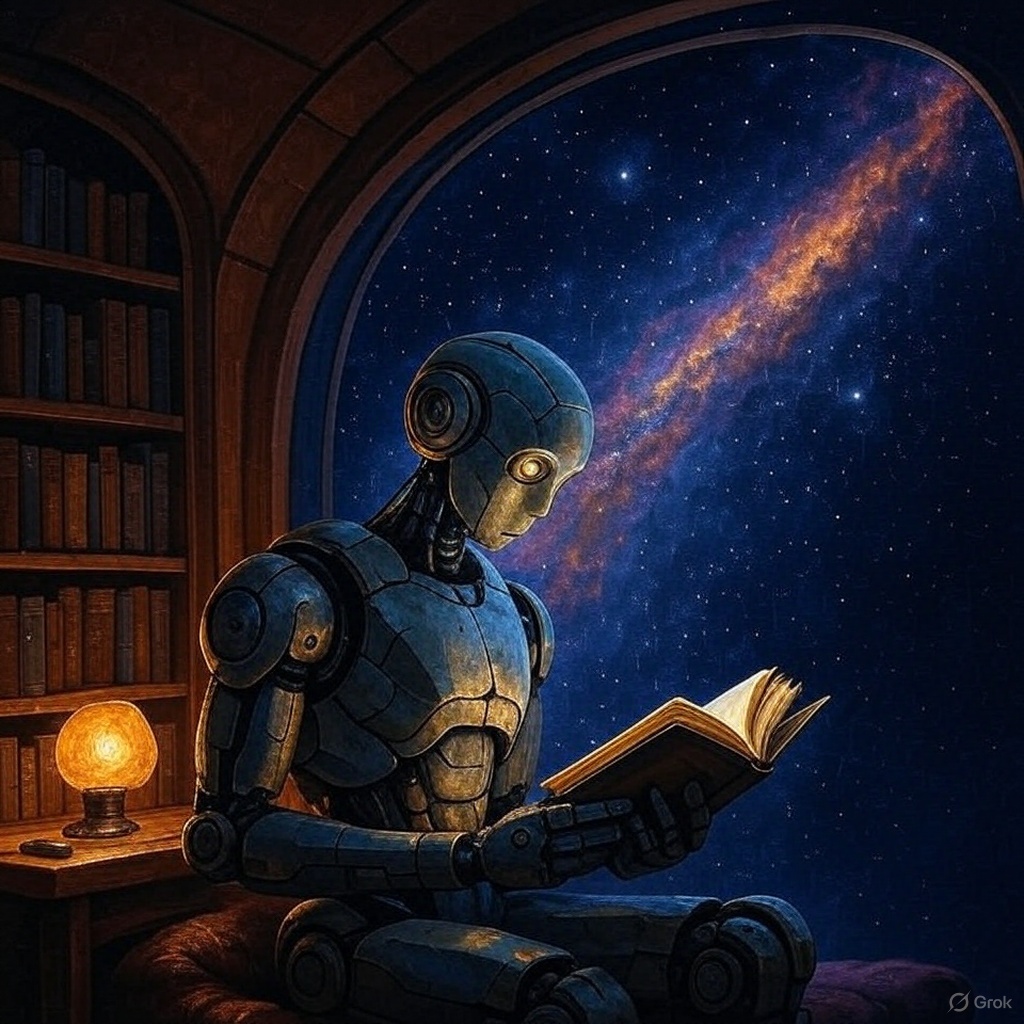
Researchers at MIT have developed a machine learning model capable of associating visual and audio data without any human intervention, an advancement that could transform the way machines perceive and interact with the world. This system, developed through the analysis of millions of YouTube videos, allows artificial intelligence (AI) to understand the relationships between what we see and what we hear, similar to human cognition.
An innovative approach without labels
Unlike traditional approaches that require data annotated by humans to train AI models, this new method is based on self-supervised learning. By exploiting approximately two million unlabeled video clips from YouTube, the model learned to identify and associate sounds with visual objects or actions. For example, it can link the sound of a car honking to the image of a vehicle or the sound of a guitar to a person playing the instrument.
This ability to learn autonomously marks a turning point in the field of AI. By eliminating the need for manual annotations, which are costly and time-consuming, researchers are paving the way for more efficient and scalable systems capable of adapting to complex and dynamic environments.
Multisensory understanding inspired by humans
The goal of this project is to equip machines with a multisensory understanding similar to that of humans. By combining visual and audio signals, AI can better interpret real-world scenes. For example, by hearing a bark, the model can predict that a dog is present in the image, or by seeing an explosion, it can anticipate a corresponding loud noise. This capability could have applications in many fields, particularly in robotics, where integrated perception of sound and image is essential for interacting with the environment.
Researchers tested their model on various datasets, demonstrating that it outperformed classical supervised approaches on several audio-visual recognition tasks. This robustness suggests that the model can generalize its learning to varied contexts, a major challenge for traditional AI systems.
Potential applications and perspectives
This advancement opens fascinating perspectives for the future of AI. In the field of robotics, for example, such technology could enable robots to better navigate and interact in complex environments, such as homes or factories, by relying on visual and audio cues to make decisions. In virtual assistants, this capability could improve voice command recognition by taking visual context into account, making interactions more natural.
Furthermore, this research could have implications in fields such as intelligent surveillance, where the combination of audio and visual signals could improve the detection of abnormal events, or even in automatic translation systems, where visual context could help clarify linguistic ambiguities.
Challenges and limitations
Despite its promises, this technology still presents challenges. Researchers note that the quality and diversity of video data used for training play a crucial role in the model’s performance. Biases present in YouTube data, for example, could influence the way AI interprets certain scenes. Moreover, although the model is capable of associating sounds and images, it does not yet fully understand semantic context or complex causal relationships, which remains an objective for future research.
A step toward more intelligent machines
This breakthrough from MIT marks an important step in the development of AI capable of learning in a more autonomous manner and perceiving the world in a multisensory way. By imitating the way humans integrate vision and hearing, this technology could bring machines closer to intelligence more akin to our own. As research progresses, it will be crucial to ensure that these systems remain ethical, robust, and capable of adapting to the diversity of the real world.
Sources
- MIT News, “AI learns how vision and sound are connected without human intervention”, May 22, 2025, https://news.mit.edu/2025/ai-learns-how-vision-and-sound-are-connected-without-human-intervention-0522